Growing Up With The Griz
By: Maggie Stahley


By: Maggie Stahley
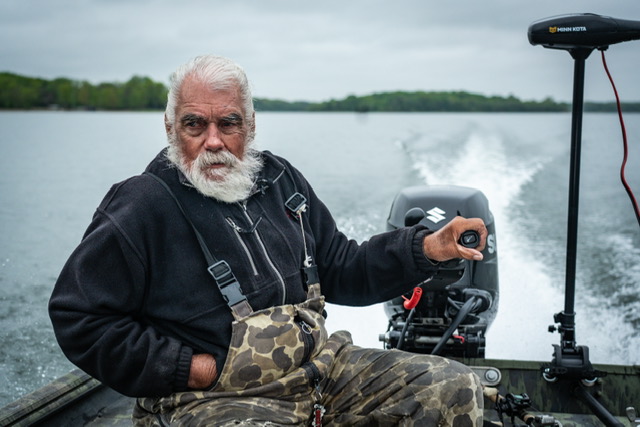
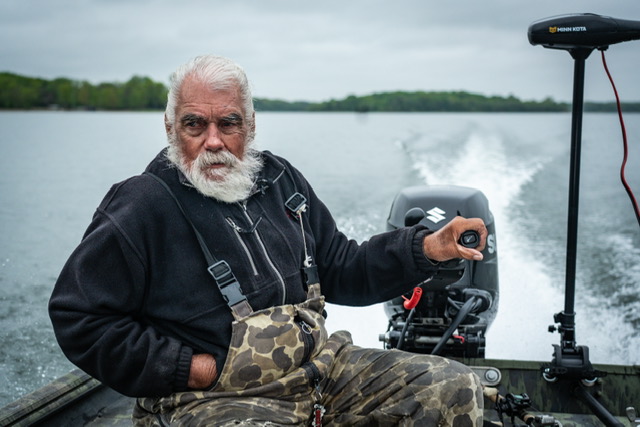
To most people, The Griz is a legend in the fishing world. He invented a popular walleye technique called rip jigging, known for producing staggering numbers of fish. He’s famous for guiding on the Mississippi River and sending clients back to shore so exhausted they’d practically crawl out of the boat, death-gripping the dock. If they made it through the day, they earned a sticker proudly declaring: “I Survived a Day with The Griz.” If you wanted to head in early? Too bad. There were still fish to catch.
He’s known as a hardcore river rat who never needed a fancy boat, cutting-edge electronics, or live imaging. Just an unmatched work ethic and the passion to get up every day, even now, at the ripe age of 84 years old, and put people on fish. When he isn’t on the water, you’ll probably find him holding court at Blue Ribbon Bait Shop in Oakdale, Minnesota, shooting the shit with anyone willing to talk fishing.
To everyone else, he’s The Griz.
To me, he’s Grandpa.
When I was young, he intimidated me. He’s a big, grizzly-looking man with a rugged beard, hands the size of paper plates, and a wardrobe that usually consists of tattered jeans and flannel shirts that make him look like he wandered out of a logging camp. I felt about him the way most kids feel about Santa Claus: the idea of him was great, but seeing him in the flesh was a little frightening.
Most of my friends had grandpas who spoke in gentle, supportive voices and handed out butterscotch candies. Mine wasn’t exactly that guy.
I remember sitting in his boat as a kid, fishing for panfish and being terrified of disappointing him. He taught me the basics, but it wasn’t until middle school, when I started taking a real interest in fishing and the outdoors, that we began spending more time together on the water.
As I got older, I started realizing just how unique it was to have him as my grandpa.
I attended the ceremony where he was inducted into both the Minnesota and National Fishing Halls of Fame, but it wasn’t until a school field trip to the Science Museum of Minnesota that it really hit me. While my classmates were crowded around a fishing exhibit featuring my grandpa, oohing and ahhing over him, I felt like the coolest kid in the building.
At home, life with him was just as memorable. It wasn’t uncommon to be upstairs baking a cake with my grandma and hear a voice boom down the hallway: “Goin’ to Fleet Farm… to get some rubber frogs.”
To this day, my cousins and I still quote it frequently.
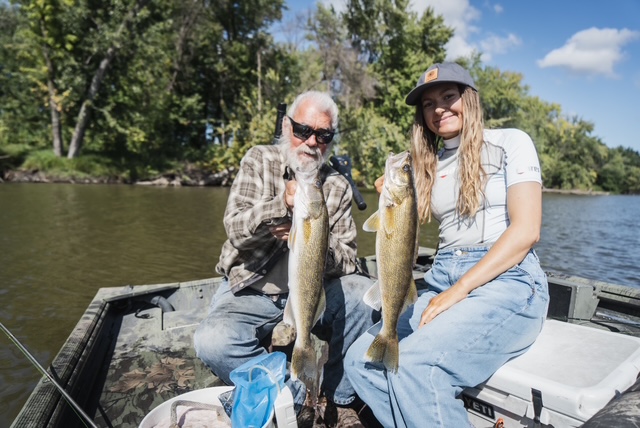
I can say with complete certainty that I would not be who I am today without him.
He’s the reason I pursued a degree in biology with an emphasis in fisheries and conservation. As a kid, I watched him fight to make Pool 2 on the Mississippi a catch-and-release-only fishery to preserve its walleye population so future generations could have the opportunity to catch a ten-pound walleye right in the Twin Cities metro. Seeing someone care that deeply about protecting a resource changed the way I look at the outdoors and our responsibility to protect it.
Even now, every time we’re on the water together, someone inevitably comes up at the boat launch or idles over to thank him for what he did for the fishery. It’s a reminder that his impact extends far beyond the fish he caught.
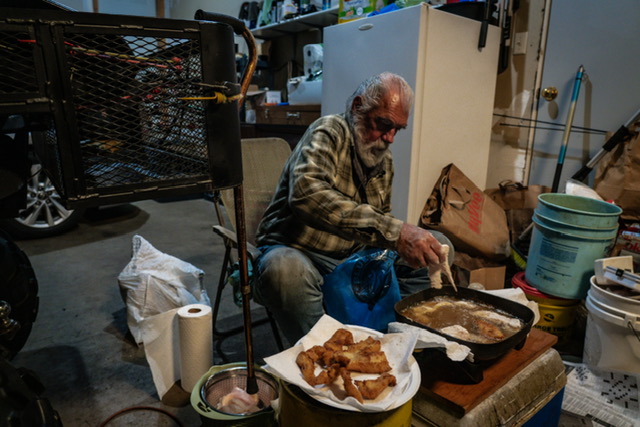
There was also a certain way of doing things when you were around the Griz.
If you showed up to one of his fish fries with lemon wedges or tartar sauce, he’d look at you with genuine disgust. In his mind, if a walleye was cooked properly, why on earth would you need to cover it up and mask the taste?
And if you ordered walleye off the menu at a restaurant while he was sitting at the table, you better be prepared for some questioning. To him, it was a waste of money. After all, he’d spent a lifetime catching walleye, and he was pretty sure nobody in a commercial kitchen knew what to do with it once they had it.
He also firmly believes bluegills should be fried whole, not filleted. His reasoning is simple: filleting wastes meat, and besides, they taste better that way. Whether you agreed with him or not was irrelevant. He wasn’t asking for opinions.
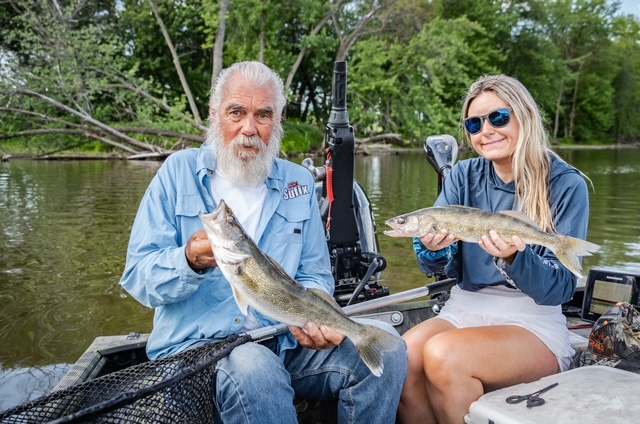
Like most things in life, Grandpa had his way of doing it, and after 84 years of catching more fish than most people could dream of, arguing with him seemed like a losing battle.
For most of my life, I looked up to him because of what he’d accomplished. These days, our relationship is closer than ever because of who he is.
A few months ago, I moved from Minnesota to Charleston, South Carolina. I was excited about the opportunity, the adventure, and the chance to experience a completely different fishery. Then came the hardest goodbye I’ve ever had.
For the first time in my life, I wasn’t just a short drive away from the person I’d spent thousands of hours fishing with.
Now I find myself waiting for his nightly 7:00 p.m. phone call.
Like clockwork, my phone lights up and I get the daily report. He tells me how his clients did, where they were from, how many fish they caught, how good (or bad) they were at fishing, and, most importantly, how many of his jigs they managed to lose that day.
Then the conversation turns to me. He wants to know how the saltwater fishing is going. What I’m catching. How the new john boat is running. Before long, he’s giving me a checklist of everything I absolutely need to have on board in case the Coast Guard decides to stop me. Then he wants a full breakdown of what it’s like fighting bull reds in the rivers down here.
I can tell, even though it’s rarely said outright, how proud he is. He knows that I’ll be the one carrying on the fishing obsession and legacy in the family.
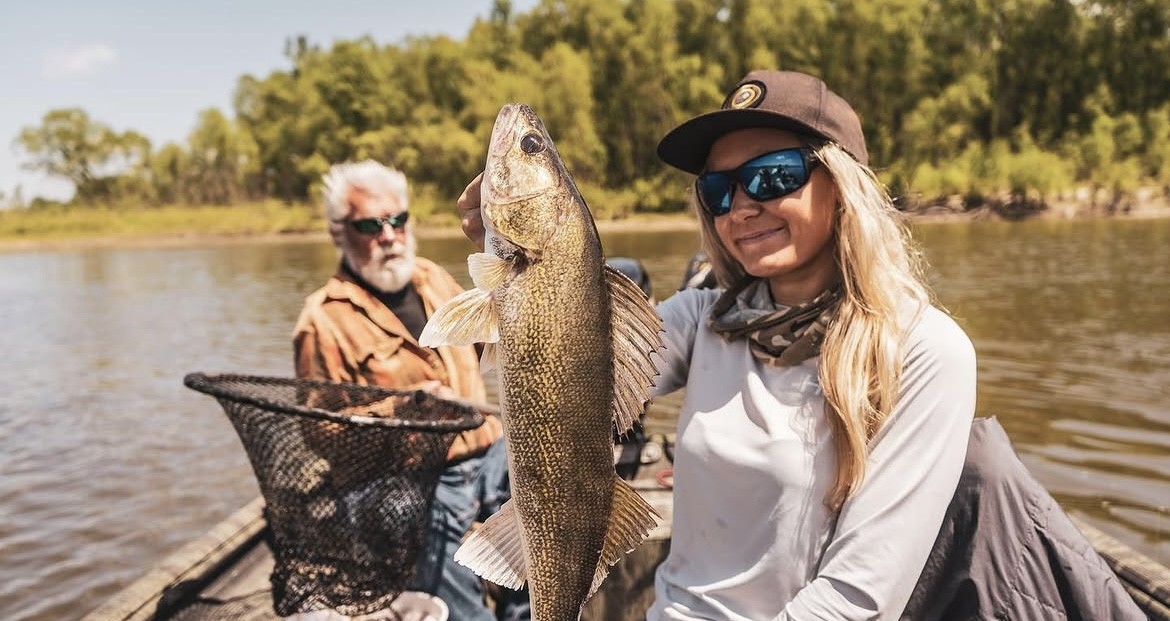
The funny thing is that he doesn’t tell me he’s proud very often. Instead, I hear it from everyone else.
We’ll walk into the bait shop or one of his buddies’ fish fries and they’ll start telling me all about myself. Somehow they know I became a Divemaster. They know about my career. They know about the latest buck I shot or the steelhead I landed. Before I can even ask how they know any of this, they’ll laugh and say, “Oh yeah, your grandpa brags about you all the time.”
Those moments mean more to me than he’ll probably ever know.
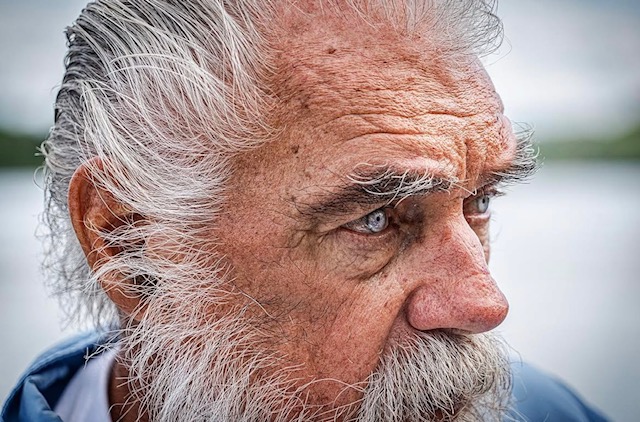
Of course, growing up with the Griz also gave me a slightly warped perception of fishing.
It wasn’t until college, when I started fishing with friends instead of my grandpa, that I realized catching your limit every trip is not normal.
For years, I genuinely thought most people just weren’t very good at fishing. I was blissfully unaware that it’s called fishing and not catching for a reason.
Getting skunked was a foreign concept.
Eventually, reality caught up with me. New lakes didn’t come with decades of accumulated knowledge. Fish didn’t always cooperate. Success wasn’t guaranteed.
But in a strange way, that’s where his influence showed up the most. Getting humbled on unfamiliar water didn’t discourage me; it made me more determined. It pushed me to learn, adapt, and figure things out for myself. And if I’m lucky, maybe make Grandpa proud along the way.
To most people, he’ll always be The Griz: the Hall of Famer, the river rat, the guy who could put anyone on fish.
To me, he’ll always be the guy whose phone call I’m waiting for around 7 PM.
Grandpa.